
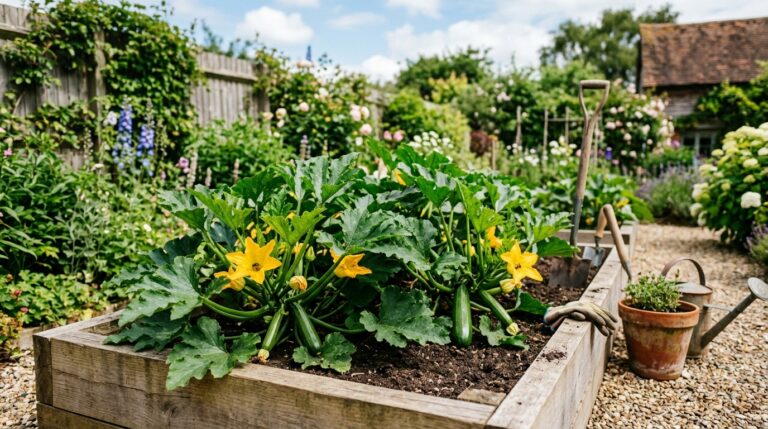
Why Grow Courgettes?
Courgettes are one of the most rewarding vegetables you can grow in a British garden. They’re fast-growing, generous producers and surprisingly straightforward to look after, even if you’ve never grown vegetables before. A single healthy plant can keep you in courgettes from midsummer right through to the first frosts — sometimes more than you know what to do with.
Whether you have a large vegetable patch, a raised bed or even a decent-sized patio, there’s a way to grow courgettes that suits your space. Our gardening guides cover all sorts of edible crops, but courgettes are always worth a special mention for beginners. They’re forgiving, fast and fantastically productive.
Choosing the Right Variety
There are more courgette varieties available than most people realise. The classic dark green types are most familiar, but you’ll also find yellow, pale green and even round varieties that are well worth trying.
- Defender F1 – a reliable, disease-resistant green courgette ideal for UK gardens
- Soleil F1 – a bright yellow variety with a mild, sweet flavour
- Romanesco – a ribbed, pale green Italian variety with excellent flavour
- Patio Star – a compact bush variety bred for containers and smaller spaces
- One Ball – a round, apple-shaped variety that’s a real talking point
For most gardeners, a standard green F1 hybrid is the safest starting point. They tend to be vigorous, heavy-cropping and bred to cope with the vagaries of the British climate.
When to Sow Courgettes
Courgettes are tender plants, which means they can’t tolerate frost. Timing your sowing correctly makes a real difference to success.
- Indoor sowing: Sow seeds indoors from mid-April to mid-May. This gives plants a head start before outdoor conditions are warm enough.
- Direct sowing outdoors: Once all risk of frost has passed — usually late May or early June in most parts of the UK — you can sow directly into the ground.
To sow indoors, plant individual seeds on their edge (this helps prevent rotting) about 2cm deep in small pots of compost. Place them somewhere warm — a windowsill, propagator or airing cupboard works well. Seeds typically germinate within five to seven days at around 20°C.
Hardening Off and Planting Out
If you’ve started seeds indoors, you’ll need to harden off the seedlings before planting them outside. Spend about ten days gradually acclimatising them to outdoor conditions — put them outside during the day, bring them in at night, and slowly increase the time they spend outside.
Plant out your courgettes once the risk of frost has truly passed. Choose a sunny, sheltered spot with rich, well-draining soil. Courgettes are hungry plants that appreciate a good base, so dig in plenty of well-rotted compost or manure before planting.
- Space plants around 90cm apart — they spread out considerably as the season progresses
- Plant into a slight hollow or create a small ridge around the base to help direct water to the roots
- Water in well after planting
Growing Courgettes in Containers
Don’t worry if you’re short on ground space. Courgettes can be grown successfully in large containers — look for pots that are at least 45–50cm in diameter and depth. Use a good-quality peat-free compost, ideally mixed with some slow-release fertiliser granules to give plants a long-term nutrient boost.
Container-grown courgettes will need watering more frequently than those in the ground, so check them daily during dry spells and never let the compost dry out completely.
Watering and Feeding
Consistent watering is key with courgettes. They have large, thirsty leaves and produce a lot of fruit, so they need a reliable supply of moisture throughout the growing season.
- Water at the base of the plant rather than overhead — wet foliage can encourage powdery mildew
- In dry weather, aim to water deeply two or three times a week rather than little and often
- Once plants start flowering and fruiting, feed weekly with a high-potash liquid fertiliser such as tomato feed
A mulch of garden compost around the base of each plant will help retain moisture and suppress weeds — particularly useful during hot summer spells.
Pollination and Flowers
Courgette plants produce separate male and female flowers. The female flowers have a tiny immature courgette at their base; male flowers sit on plain straight stems. In most summers, bees and other pollinators do the job for you. However, if fruiting seems slow or fruits are rotting before they develop, you can hand-pollinate by transferring pollen from a male flower to a female using a small paintbrush or simply by removing a male flower and rubbing it gently into the centre of a female.
Common Problems
Courgettes are generally easy to grow but there are a few issues to watch for:
- Powdery mildew: White, powdery patches on the leaves are a sign of powdery mildew, especially later in summer. Improve airflow around plants and avoid wetting the leaves when watering.
- Slug damage: Young plants are particularly vulnerable to slugs. Use copper tape around containers, lay slug wool or try organic slug pellets.
- Rotting fruits: Small fruits that rot before developing are usually due to poor pollination — see the section above.
- Vine weevil: If container plants suddenly wilt, check the compost for vine weevil grubs. Treat with a biological control nematode if found.
Harvesting Courgettes
This is where courgettes really shine. Plants begin fruiting from around eight weeks after transplanting and can continue cropping for months. The key is to harvest regularly and to pick fruits while they’re still on the small side — around 10–15cm is ideal. At this size they have the best flavour and the most tender texture.
Left unchecked, courgettes quickly swell into marrows. This isn’t necessarily a problem if you want a marrow, but allowing fruit to remain on the plant diverts energy away from producing new courgettes. Check plants every couple of days once fruiting begins — it’s easy to miss one hiding under a leaf.
Use a sharp knife or secateurs to cut fruits cleanly from the plant. Pulling can damage the stem.
Tips for a Better Crop
A few simple habits will make a noticeable difference to your harvest:
- Remove any yellowing or damaged leaves to improve airflow and reduce disease risk
- Keep on top of watering during dry spells — stress causes plants to drop flowers and fruits
- Feed consistently once fruiting starts; don’t skip a week
- Grow more than one plant if space allows — two or three plants will keep a whole family well supplied
If you’re keen to explore more of what you can grow in your garden, browse our full range of growing guides for inspiration on herbs, salads, tomatoes and much more. There’s always something new to try, whatever size your plot.
Final Thoughts
Courgettes are the kind of crop that builds a gardener’s confidence. They germinate reliably, grow quickly and reward even modest attention with an impressive harvest. With a sunny spot, decent soil, plenty of water and a little regular feeding, there’s every reason to expect a wonderful season’s worth of homegrown courgettes. Get your seeds sown in spring and you’ll be harvesting by midsummer — and wondering why you didn’t start growing them sooner.