
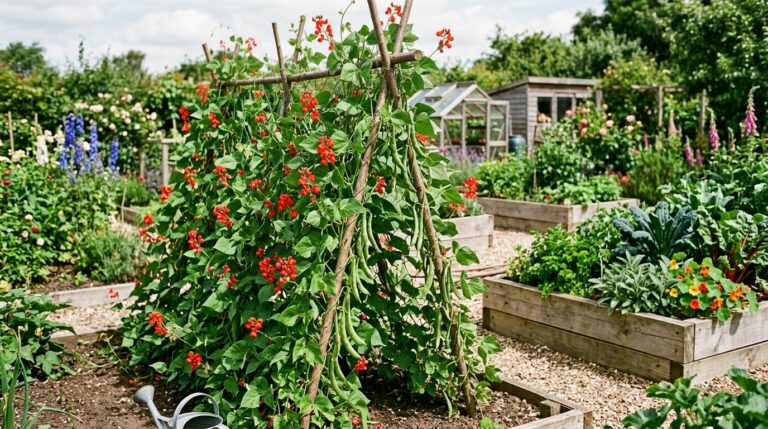
Why Grow Runner Beans?
Runner beans are one of the most rewarding vegetables a home gardener can grow. They’re fast-growing, incredibly productive, and when picked regularly, a single row can keep a family in beans for weeks on end. They also look rather beautiful scrambling up canes or a rustic wigwam, with bright scarlet or white flowers that brighten up the vegetable patch throughout summer.
Whether you have a large allotment, a modest back garden or even a sunny patio, runner beans are surprisingly versatile. They’ll grow happily in the ground or in deep containers, making them an excellent choice for gardeners of all abilities. If you’re already growing other vegetables and want to add something truly satisfying, runner beans are well worth a go.
When to Sow Runner Beans
Timing is everything with runner beans. They’re frost-sensitive, so it’s important not to rush things. In the UK, you have two main options:
- Indoors: Sow seeds from late April in small pots or root trainers on a warm windowsill or in a greenhouse. This gives plants a head start and means you can transplant sturdy young plants outside once the risk of frost has passed.
- Direct sowing outdoors: Wait until mid-May to early June when the soil has warmed up. Sow seeds about 5cm deep, two per station, and thin to the strongest seedling once they’ve germinated.
If sowing indoors, harden off young plants for around ten days before planting out — gradually increasing their exposure to outdoor conditions stops them going into shock.
Choosing the Right Variety
There are plenty of excellent runner bean varieties to choose from, each with its own strengths. Here are a few favourites among UK gardeners:
- Enorma: A classic long-podded variety, reliable and heavy-cropping.
- Scarlet Emperor: One of the oldest and most trusted varieties, with striking red flowers and tasty pods.
- White Lady: Produces white flowers and is known for setting pods well even in hot, dry spells.
- Hestia: A dwarf variety that’s ideal for pots and smaller spaces, and doesn’t need tall supports.
For most gardeners, a traditional climbing variety like Scarlet Emperor or Enorma will give the biggest harvest. If space is tight, Hestia is a brilliant alternative that performs well in containers on a patio or balcony.
Preparing Your Soil
Runner beans are hungry plants and they perform best in rich, moisture-retentive soil. Before planting, take the time to prepare the ground properly — it’ll make a real difference to your harvest.
- Dig in plenty of well-rotted compost or manure a few weeks before planting.
- Runner beans prefer a slightly acid to neutral soil with a pH of around 6.0 to 7.0.
- Avoid waterlogged ground; good drainage is important, though the soil should hold moisture well during dry spells.
- If you’re growing in containers, use a good-quality peat-free multipurpose compost mixed with some John Innes No. 3 for extra body and nutrition.
Like many other vegetables, runner beans are legumes and fix their own nitrogen from the air, which means they actually improve the soil for whatever you plant there next year. For more vegetable growing inspiration, have a browse through the Forest Ferns gardening guides — there’s plenty of practical advice for getting the most from your plot.
Building Supports
Climbing runner beans can reach 2.5 metres or more, so sturdy support is essential. Putting supports in place before you plant saves a lot of fuss later on. Here are the most popular options:
- Wigwam: Push six to eight canes into the ground in a circle and tie them together at the top. Plant one or two seeds or seedlings at the base of each cane. Wigwams are attractive and work well as focal points in a border.
- Double row: Push canes in two parallel rows, angling them inward to cross at the top. Tie a horizontal cane along the top where they meet. Space canes about 20–25cm apart within each row, with 60cm between rows.
- Netting: Stretch sturdy bean or pea netting between posts for the plants to scramble up. This works well for longer rows.
Whatever you choose, make sure the structure is firmly anchored — a crop of fully grown runner beans acts like a sail in strong winds and can bring a poorly fixed wigwam crashing down.
Planting Out and Spacing
Once the risk of frost has passed (usually mid-May to early June in most parts of the UK), plant your young runner beans at the base of their supports. Space climbing varieties around 15–20cm apart along the row. For container growing, one plant per 20cm pot or three to four plants in a larger trough is about right.
Water plants in well after planting. If it’s a warm day, do this in the evening to reduce stress on young transplants.
Watering and Feeding
Runner beans need consistent moisture throughout the growing season, especially once they start flowering and setting pods. Irregular watering is one of the most common reasons beans fail to set pods properly.
- Water deeply and regularly during dry spells — aim for the roots rather than splashing leaves.
- Mulching around the base of plants with compost or bark helps retain soil moisture and suppress weeds.
- Once plants are in full flower, a weekly liquid feed with a tomato fertiliser (high in potassium) will encourage a generous crop.
- Container-grown beans will need watering more frequently than those in the ground, sometimes daily in hot weather.
Common Problems and How to Fix Them
Even experienced gardeners run into occasional difficulties with runner beans. Here are the most common issues and their solutions:
- Flowers dropping without setting pods: Usually caused by dry soil or dry air at the roots. Water more consistently and mulch well. Misting flowers in the morning can help in very dry conditions.
- Blackfly (aphids): The black bean aphid is a common pest. Pinch out the growing tips once plants reach the top of their supports — this removes the soft new growth that blackfly favour. You can also spray with a diluted washing-up liquid solution.
- Slugs and snails: Young seedlings are vulnerable. Use copper tape around containers, apply organic slug pellets sparingly, or try beer traps.
- Poor germination: Old or chilled seeds often fail to germinate. Store seeds in a cool, dry place and use fresh seed each year where possible.
Harvesting Runner Beans
This is the part every gardener looks forward to. Runner beans are ready to pick when the pods are around 15–20cm long and still flat — you shouldn’t be able to feel the beans bulging inside. Younger pods are more tender and have a better flavour.
The golden rule is to pick regularly. If you leave pods to mature on the plant, the plant thinks it’s done its job and slows down production dramatically. Check plants every two to three days during peak season and harvest anything that’s ready, even if you have more than you can eat. Surplus beans can be blanched and frozen very successfully.
A well-tended row of runner beans sown in late spring can crop from July right through to the first frosts in October, making them one of the most cost-effective crops you can grow. For more tips on making the most of your kitchen garden season by season, the team at Forest Ferns has a growing library of practical advice to help you along the way.
At the End of the Season
Once the first frosts arrive, runner bean plants will die back quickly. Cut the top growth down and compost it, but leave the roots in the ground for a few weeks — they contain nitrogen-fixing nodules that will benefit the soil. Then dig them in or remove them before preparing the bed for the following year.
Rotate your beans to a different part of the garden each year to reduce the build-up of soil-borne pests and diseases, and to spread the soil benefits around your plot.