
Why Grow Strawberries in Hanging Baskets?
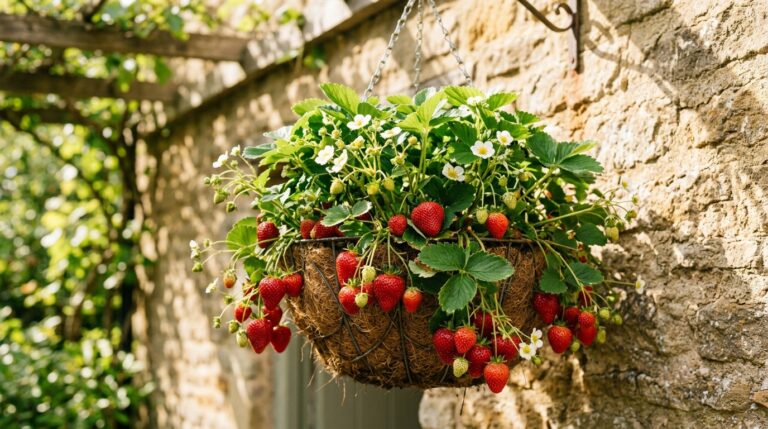
Strawberries are one of those fruits that feel almost magical to grow yourself — there’s nothing quite like picking a warm, sun-ripened berry straight from the plant. But if you’re short on beds and borders, a hanging basket is one of the cleverest ways to get a decent crop. They work brilliantly on patios, balconies, fences, or beside the back door, and because the fruit hangs freely over the sides, you get good airflow, less risk of rot, and fewer encounters with slugs and snails.
Hanging baskets also make it easy to water and feed consistently, and the trailing habit of most strawberry varieties suits the form perfectly. Whether you’re a first-time grower or simply want to make more of a small outdoor space, this is one of the most rewarding projects you can take on through spring and summer.
Choosing the Right Strawberry Variety
Not all strawberries are equally well suited to baskets. You’ll want compact, trailing, or everbearing types rather than large, vigorous June-bearing varieties that tend to put most of their energy into runners rather than fruit.
Some excellent choices for hanging baskets include:
- Elan – a popular everbearing variety with a reliably sweet flavour and good trailing growth.
- Toscana – striking pink flowers and a long fruiting season; almost ornamental as well as productive.
- Temptation – another everbearing type that crops from June right through to October.
- Maxim – produces very large fruits and cascades nicely over the basket edge.
Everbearing (also called perpetual) varieties are generally your best bet for baskets, as they produce flushes of fruit throughout the season rather than one concentrated burst in early summer.
What You’ll Need
Before you get started, gather the following:
- A hanging basket at least 30–35cm in diameter (larger is better — strawberries need root space)
- A sturdy bracket rated to hold a well-watered basket, which can be surprisingly heavy
- Coconut fibre or moss liner
- Good-quality multipurpose compost mixed with a little perlite for drainage
- Slow-release fertiliser granules
- Strawberry plants or runners — three to four per standard basket
- A liquid tomato feed for use throughout the growing season
It’s worth checking out gardening advice on sites like this helpful gardening resource if you’re unsure which compost or feed to start with — choosing the right growing medium makes a real difference from the outset.
How to Plant Your Strawberry Basket
Step 1 – Line and part-fill the basket
Line the basket with your coconut fibre or moss liner, pressing it firmly into the frame. Mix your compost with a handful of perlite — roughly one part perlite to five parts compost — and fill the basket about halfway. Stir in a measure of slow-release fertiliser granules according to the packet instructions.
Step 2 – Position the plants
If your basket has side holes, you can tuck a plant or two through them for a fuller look and better coverage. Otherwise, simply arrange three to four plants evenly around the top of the basket. Spread the roots gently and make sure the crown — the point where the leaves meet the roots — sits just at soil level. Burying the crown leads to rot; planting too high exposes roots and causes stress.
Step 3 – Top up and firm in
Fill in around the plants with more compost, firming gently as you go. Leave a centimetre or two of space at the top to make watering easier. Give the basket a thorough soak straight away.
Step 4 – Hang in a sunny spot
Strawberries need at least six hours of direct sun each day to produce good fruit. A south- or west-facing wall is ideal. Make sure your bracket is properly fixed — a fully watered basket can weigh 5–7kg or more, so take the time to secure it properly into masonry or a sturdy fence post.
Watering and Feeding
This is the part where hanging basket strawberries demand the most attention. Baskets dry out quickly — particularly in warm or windy weather — and strawberries are not particularly forgiving of drought when they’re setting fruit. In summer, you may need to water daily, sometimes twice if conditions are very hot.
A simple test: push your finger an inch into the compost. If it feels dry at that depth, it’s time to water. Water thoroughly until it drains freely from the bottom.
Once flowers appear, switch to a weekly liquid tomato feed (high in potassium) to encourage good fruit set and strong flavour. Continue this right through to the end of the fruiting season.
Ongoing Care Through the Season
Strawberries in baskets are generally low-maintenance, but a few regular jobs will keep the plants healthy and productive:
- Remove runners promptly – those long, thread-like stems the plant sends out will divert energy away from fruiting. Snip them off as they appear unless you want to root them for new plants.
- Deadhead spent flowers – removing old flowers encourages the plant to put energy into the developing fruits nearby.
- Check for pests – aphids, vine weevil, and spider mite can all affect basket-grown strawberries. Inspect plants regularly and treat early with an appropriate organic spray if needed.
- Protect from birds – a loose net draped over the basket will save your crop from hungry blackbirds once the fruit starts to colour up.
What to Do at the End of the Season
Once fruiting has finished in autumn, cut back the old foliage to leave just the central crown and young leaves. You have two options at this point: compost the plants and start fresh next year with new runners or plug plants, or overwinter the plants somewhere sheltered — such as an unheated greenhouse or cold frame — and replant them in refreshed compost the following spring.
If you’re interested in extending your edible growing beyond strawberries, there’s plenty of practical inspiration to explore over at Forest Ferns gardening guides, from growing tomatoes in containers to making the most of a compact outdoor space.
Common Problems and How to Fix Them
- Fruit not forming – usually a pollination issue. Try gently brushing an open flower with a soft paintbrush to transfer pollen, or position the basket somewhere with better access for bees.
- Fruit rotting before ripening – often caused by overwatering or poor airflow. Ensure the basket isn’t sitting waterlogged and thin any overcrowded growth.
- Pale or yellowing leaves – a sign of nutrient deficiency. Step up liquid feeding and check the compost hasn’t become exhausted.
- Wilting despite regular watering – check the roots for vine weevil larvae, which are creamy-white grubs that eat roots and can devastate a basket plant surprisingly quickly.
A Small Space, a Big Reward
Growing strawberries in hanging baskets is one of those genuinely satisfying garden projects that delivers real results without requiring much space, experience, or expense. Get the planting right, stay on top of watering and feeding, and you’ll be enjoying homegrown strawberries from early summer well into autumn — all from a couple of baskets by the back door.